

A GoMaKaBo Insight
Introduction
Mumbai’s real estate story has always been one of scarcity — limited land, vertical growth, and fragmented neighbourhoods. But over the last decade, a quiet shift has been underway. Large, integrated townships are changing how Mumbaikars live, work, learn and play — bringing lifestyle, infrastructure, and convenience into a single, master-planned ecosystem.
From Oberoi Garden City in Goregaon to Palava City in Dombivli and Hiranandani Gardens in Powai, these developments are emerging as mini cities within the metropolis. According to insights from GoMaKaBo.net, demand for township living has grown steadily, driven by buyers seeking better quality of life, organised infrastructure, and long-term value.
What Exactly Is an Integrated Township?
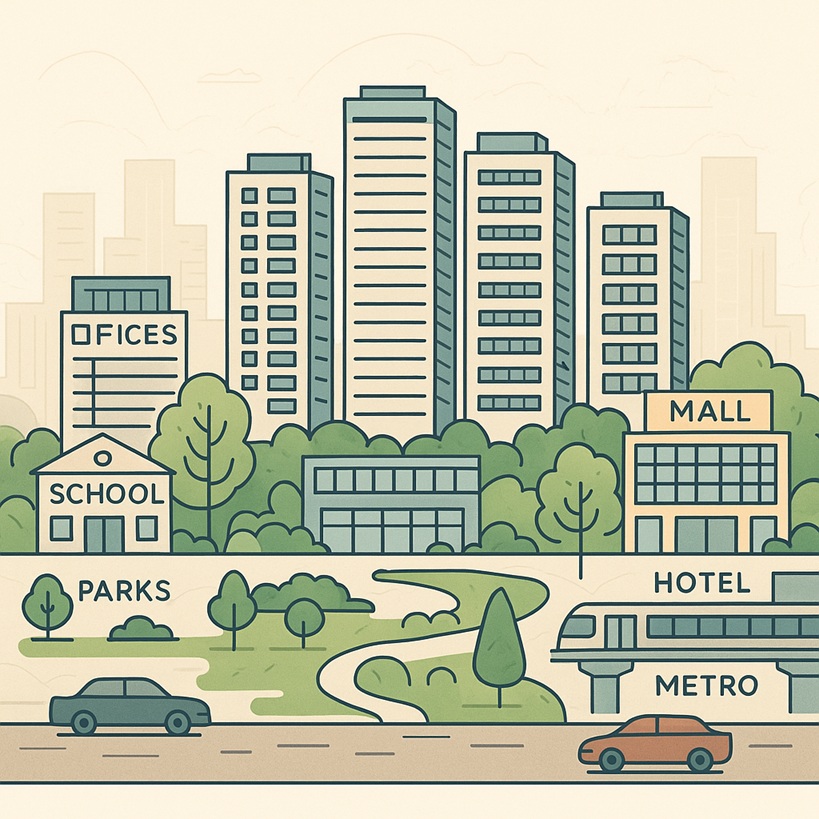
An integrated township is more than just a residential complex. It’s a self-contained ecosystem, typically spread over large land parcels, blending:
- Residential towers & villas
- Educational institutions
- Commercial offices
- Retail & entertainment zones
- Parks, clubhouses & leisure spaces
- Well-planned connectivity & internal roads
The result is a planned urban environment that offers convenience, social infrastructure, and community living — something most standalone projects struggle to match.
Township vs Standalone Projects — A Quick Comparison
| Parameter | Integrated Township | Standalone Project |
| Scale & Land | 10+ acres, often master-planned | Typically <1–3 acres |
| Amenities | Comprehensive (clubhouse, retail, schools, offices) | Limited to basics like gym & small clubhouse |
| Infrastructure | Internal roads, traffic mgmt, power backup, water, etc. | Dependent on municipal infrastructure |
| Lifestyle | Walk-to-work, walk-to-school, vibrant community | Isolated; relies on external facilities |
| Appreciation Potential | Steady long-term growth due to ecosystem appeal | More volatile; driven by micro-location only |
| Rental Demand | High — driven by self-sustaining ecosystem | Moderate — dependent on neighbourhood |
| Resale Liquidity | Generally better; township brand carries premium | Varies widely |
Real Examples Shaping Mumbai’s Urban Lifestyle
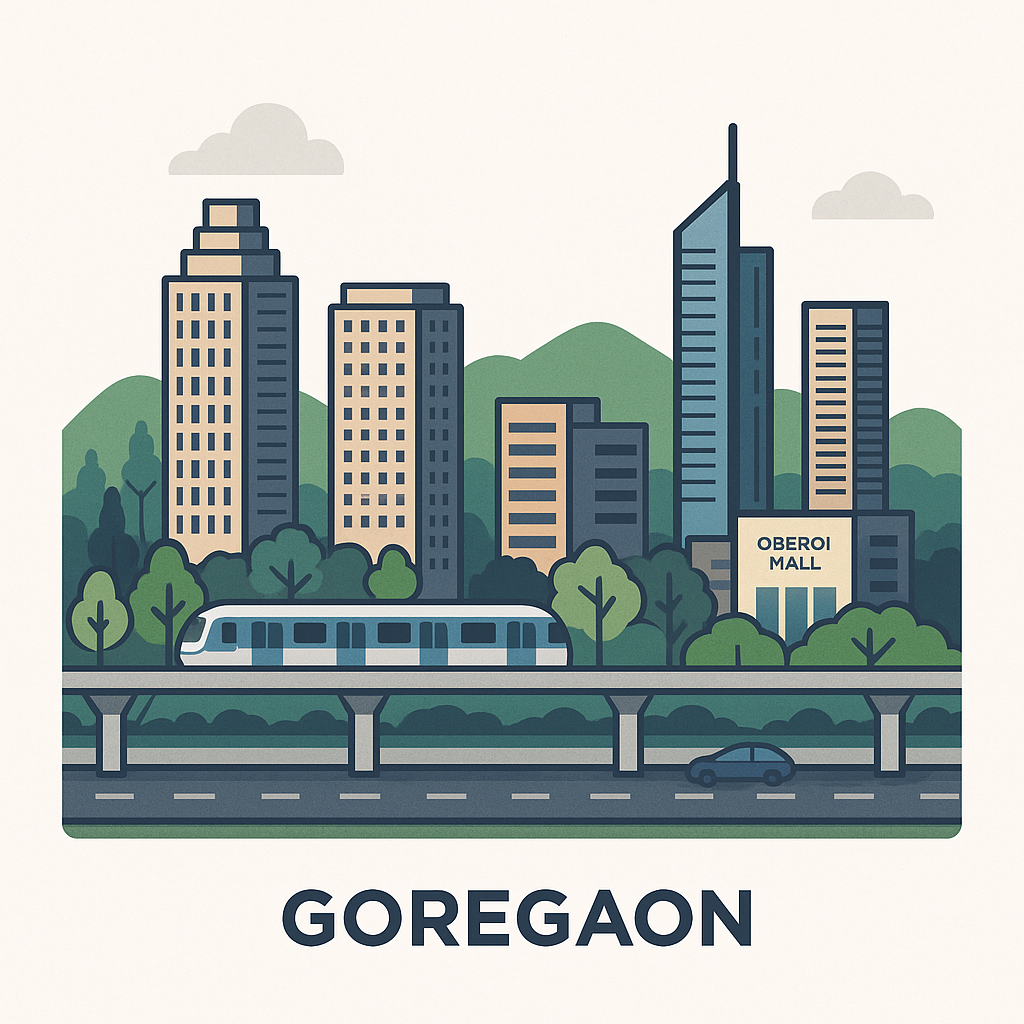
Oberoi Garden City (Goregaon East) — The benchmark for premium urban townships, integrating Oberoi Mall, offices, school, hotel, residences, and soon, metro connectivity — all walkable.
Palava City (Dombivli) — One of India’s largest townships, creating an affordable live-work-play ecosystem with schools, sports infra, and a growing business district.
Hiranandani Gardens (Powai) — An early pioneer, blending European-style streetscapes with residential towers, retail promenades, and commercial spaces.
These townships are not just homes — they’re urban destinations. No wonder they consistently feature on GoMaKaBo’s curated project list, given their enduring demand and brand equity.
Why Buyers Are Choosing Township Living
Holistic lifestyle — work, education, leisure & daily conveniences all within walking distance.
Better planning — wide internal roads, landscaping, dedicated zones for traffic & pedestrians.
Community & safety — gated environment, controlled access, managed services.
Value retention — brand-backed townships often outperform standalone projects in resale.
Future-ready — planned infrastructure allows for scalability and better long-term urban living.
The Investment Edge — Townships vs Standalone Projects
Below is a 5-year trend comparison of average capital appreciation and rental yields between integrated township developments and standalone projects across Mumbai’s western & central suburbs:
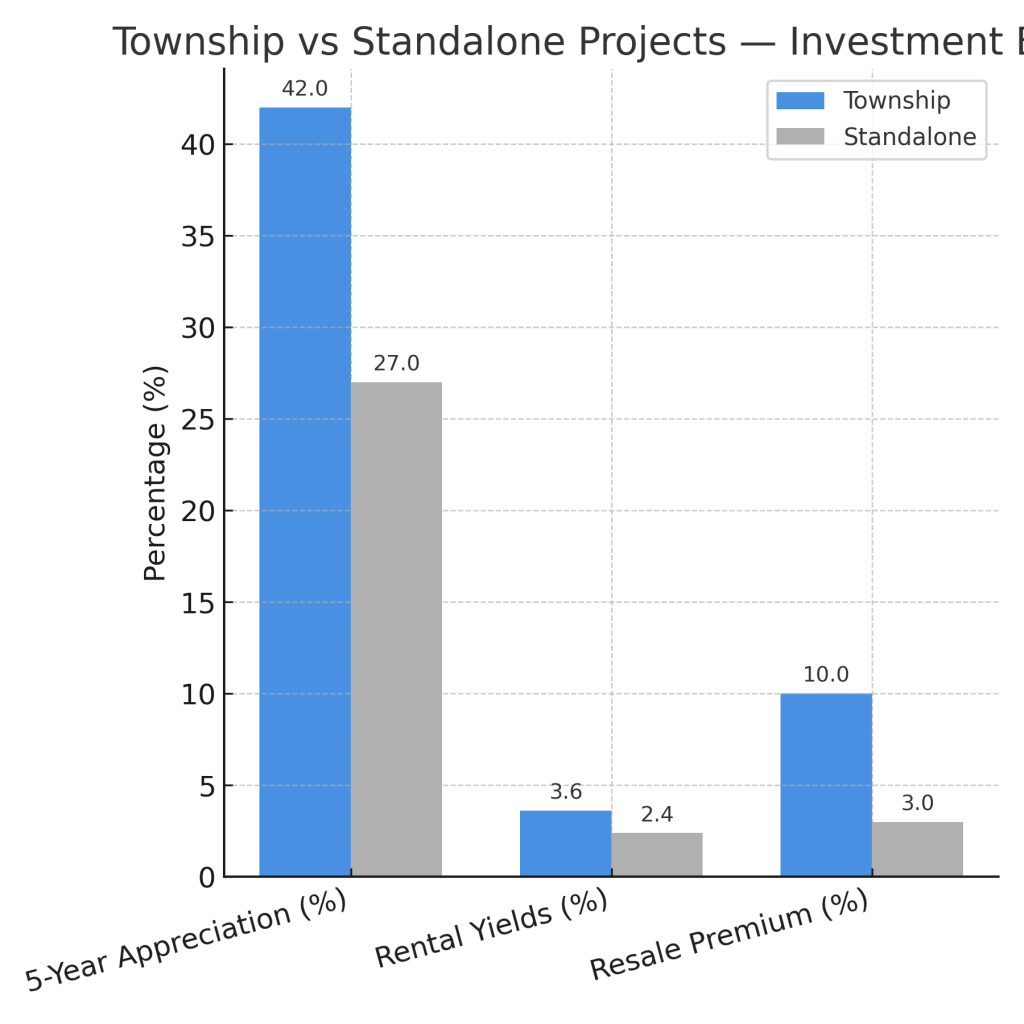
Why this matters: Township buyers enjoy not just better liveability but often stronger financial performance over time — making it a preferred segment for both end-users and investors.
Conclusion
Integrated townships are no longer just a “premium” lifestyle choice — they’re the new urban normal in a city starved for space and infrastructure. For families, they offer safety, convenience and community. For investors, they promise stronger value retention and liquidity.
GoMaKaBo.net actively showcases such landmark township developments across Mumbai, particularly the Goregaon to Borivali belt and its extended regions — helping buyers make informed, future-focused real estate decisions.
Great article